
Why the Terracotta Film Club Matters
Walk down Leicester Place on a damp Wednesday evening, and you might hear the distinct, metallic clash of a samurai sword echoing from the basement of the Prince Charles Cinema. This is the home of the Terracotta Film Club. Launched around January 2013, it carved out a dedicated monthly residency for East Asian cinema within an independent venue that ran through roughly December 2014.
Assuming mainstream multiplexes will carry independent East Asian retrospective titles is a mistake. The club curates a deliberate mix of cult, classic, and contemporary titles rarely shown on UK screens. It sits squarely within a wider boom in East Asian cinema programming across London venues during that period, capturing a moment when audiences actively sought out regional narratives over homogenized global blockbusters.
Main Point: The Terracotta Film Club proved that sustained, monthly programming of regional cinema could thrive in central London by treating film as a cultural event rather than a mere screening.
What the Terracotta Film Club Actually Offers
The residency format transforms a standard screening into a multidisciplinary event. Programming spans Japan, Korea, Thailand, Hong Kong, and mainland China, but the films are rarely presented in isolation. These cultural pairings highlight the club's multidisciplinary approach, especially where live musical accompaniments add something beyond standard screenings.
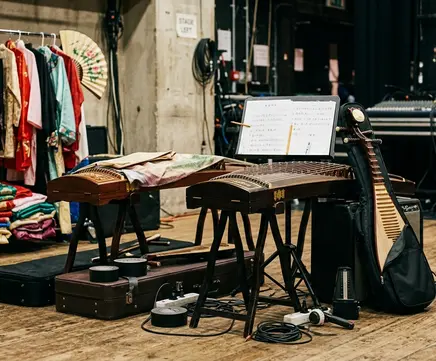
Archival listings place the March 5, 2014 event alongside live soprano and acoustic guitar performances of cinematic scores before the feature presentation. Soprano Erika Shimada and guitarist Osamu Yano performed Japanese film themes, including 'Merry Christmas Mr Lawrence', setting a distinct atmospheric tone before the projector even fired up. The availability of live musical accompaniments or director Q& As depends entirely on the specific monthly programming cycle and institutional partnerships.
The Screenings Reviewed: From Cult Thrillers to Korean Horror
How does a programmer balance the visceral thrill of a martial arts epic with the slow-burn dread of psychological horror? The programme’s range is easiest to see by national origin and genre, from vintage cult series to contemporary features.
In the archived programme, the Japanese slate brought Shinya Tsukamoto's 'Bullet Ballet' to the screen on January 29, 2014, following his abrasive 'Tetsuo' series. A month later, on February 26, the club pivoted to Nikkatsu's 1970s 'Stray Cat Rock' series starring Meiko Kaji, showcasing the studio's vibrant, rebellious youth cinema.
The same listings show Thai cinema represented by Prachya Pinkaew's 'Chocolate' (2008). The London screening on March 27 showcased uncut presentations of martial arts choreography featuring lead actors performing without stunt doubles, specifically highlighting JeeJa Yanin's immense physical commitment. Korean cinema offered a completely different texture. Bong Joon-ho's Hitchcock-ian 'Mother' played on March 26, 2014, while the Korean horror Grimm adaptation 'Hansel & Gretel', featuring Chun Jeong-myeong and Shim Eun-kyoung, closed out the early summer schedule on June 26.
The Wider London Festival Landscape
Terracotta did not operate in a vacuum. Measured across sources, from February 3, 2013, to May 18, 2014, London saw a coordinated wave of archive galas, master classes, and live director interviews across multiple cultural institutions.
The Pan Asia Film Festival ran from March 6 to 17, 2013, bringing directors like Tran Anh Hung ('Norwegian Wood') and Mira Nair ('The Namesake') to local audiences alongside dedicated exhibitions. The Asia House festival followed a year later, running from February 26 to March 9, 2014. It featured archive galas and a striking screening of 'Unforgiven' with Ken Watanabe, cleverly transposing the Western genre into the 1880s Meiji restoration.
Concurrently, the BFI's Electric Shadows season ran from February 3 to 21, 2014. Taking its name from the literal translation of 'dian ying' (movies), the season anchored the city's cinematic calendar and provided a massive institutional counterweight to the independent club scene.
Spotlight: Feng Xiaogang and the BFI Connection
Feng Xiaogang stands out here because of the rare institutional backing his retrospective received, bringing regional holiday films to Western audiences. His presence during the BFI season placed Chinese 'hesui pian' (New Year films) directly before UK viewers. His live interview, listed for February 21, 2014, provided a rare glimpse into the mechanics of mainland blockbusters.
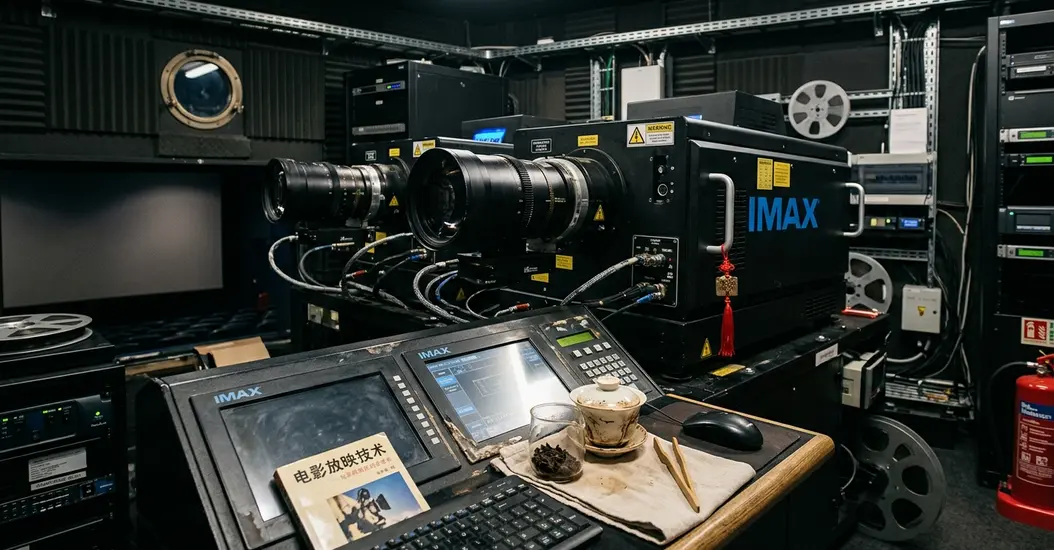
The retrospective covered his New Year trilogy from the 1997 to 1999 release windows, as well as 'Cell Phone' (2004). These early product-placement-heavy comedies, including 'If You Are the One' with Qi Shu, contrast sharply with his later, heavier works. The exhibition of historical epics utilizing large-format projection demonstrated his evolving scale. 'Back to 1942', detailing the Henan drought, and 'Aftershock' were shown in IMAX. Meanwhile, 'Assembly', starring Hanyu Zhang and set in the 1948 Chinese Civil War, proved his capability in directing massive combat sequences. Much like the tragic weight found in stage productions of The Orphan of Zhao, Feng's historical epics carry a profound sense of national memory and collective trauma.
How to Get the Most From a Visit
Securing a seat for a niche retrospective requires a different approach than walking into a Friday night blockbuster. A few habits help newcomers navigate independent cinema schedules.
- Check the monthly schedule at the Prince Charles Cinema well in advance.
- Book in advance for limited-capacity retrospective screenings and live-scored events.
- Look specifically for screenings paired with live performances or Q& As for added context.
- Pair club nights with larger festivals (Pan Asia, BFI seasons) for a fuller programme.
Expert Tip: Monthly scheduling cycles dictate availability, and cult titles frequently sell out weeks in advance. Do not rely on walk-up tickets for events featuring live musical accompaniment.
Scope and a Note on This Guide
Archival research forms the backbone of this retrospective look at London's Asian cinema scene. This guide stays within capital-centric events, acknowledging the localized nature of these specific cultural programming efforts. It relies on historical programming schedules and venue alignments from archival festival brochures covering the 2013 to 2014 programming seasons.
Caution: The scheduling patterns and venue partnerships detailed here reflect historical programming from specific past seasons, meaning current availability and formats will differ significantly for modern attendees.
Always confirm current schedules directly with the organiser. This coverage focuses strictly on London-based events and is not an exhaustive list of UK-wide East Asian cinema distribution.





Share Your Opinion