
A Stage That Looked Away
British East Asian theatre did not arrive quietly. It was won through a sustained period of friction, protest, and fierce self-determination. I look back at the late 2012 casting controversy at the Royal Shakespeare Company not as a passive grievance, but as the active catalyst for a self-determined artistic movement. The flashpoint was a major adaptation of a Chinese classic, The Orphan of Zhao. From commonly referenced data, the production allocated only 3 out of 17 roles to East Asian actors.
This casting decision laid bare a structural reality. The British stage was comfortable borrowing East Asian aesthetics, narratives, and historical weight, yet remained deeply uncomfortable putting East Asian bodies center stage. The initial protest window from late 2012 to early 2013 marked a definitive shift in how artists responded to this erasure. We stopped asking for permission to be included and started demanding accountability for being excluded.
The Orphan of Zhao and the Limits of Colour-Blind Casting
The concept of colour-blind casting was originally championed as a great equalizer in British theatre. In practice, it frequently functioned as a mechanism for colour-blindness toward East Asian actors specifically. They became invisible rather than included. Early attempts to integrate East Asian actors into classical repertoires often resulted in tokenistic background roles rather than meaningful character development.
Instead of pursuing fragmented individual boycotts, the coalition of frustrated artists opted to draft a formal collective statement. This ensured the critique targeted systemic institutional policy rather than individual cast members. Actor and writer Daniel York emerged as a lead voice in this effort. On October 30, 2012, the group released a formal protest statement explicitly naming director Gregory Doran. The statement highlighted the stark contrast between the RSC's current casting choices and the earlier diversity recommendations published in March 2003, which had seemingly been forgotten or ignored.
Main Point: The protest against The Orphan of Zhao succeeded because it shifted the conversation from personal casting disappointments to a documented failure of institutional diversity policy.
Turning Anger Into Organisation
How do you transform a moment of industry outrage into a lasting structural shift? The answer lay in community organizing. British East Asian Artists formed rapidly as a pressure group, determined to prove this was not a fleeting complaint. They needed a physical space to consolidate their demands and map out a future.
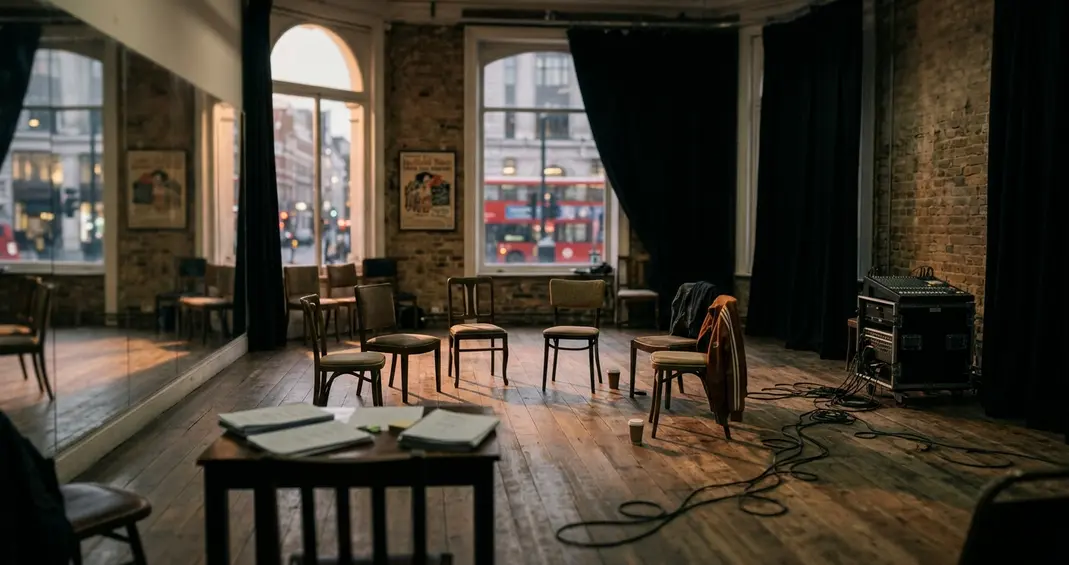
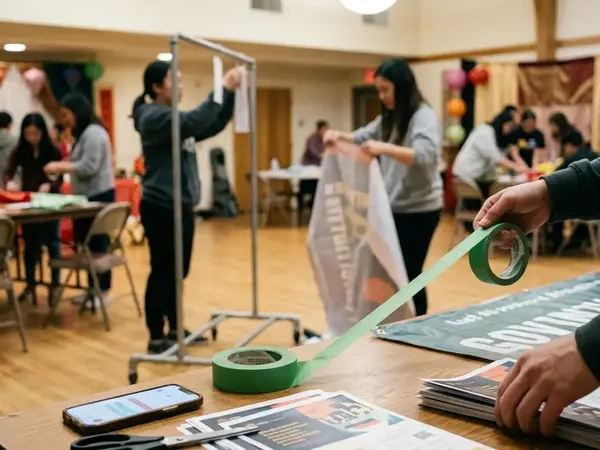
That space materialized at the 'Opening the Door' event, hosted at the Young Vic on February 11, 2013. Gathering upwards of 200 industry professionals at a prominent London arts venue required institutional weight, which artistic director David Lan provided by opening the theater's doors. Kathryn Golding and the steering committee made a crucial tactical decision regarding the event's format. They structured the community forum using open-space methodology, specifically the Devoted & Disgruntled framework. This prevented hierarchical dominance, allowing grassroots artists to directly set the policy agenda and speak without institutional filters.
Naming the Stereotype: Fu Manchu and the Model Minority
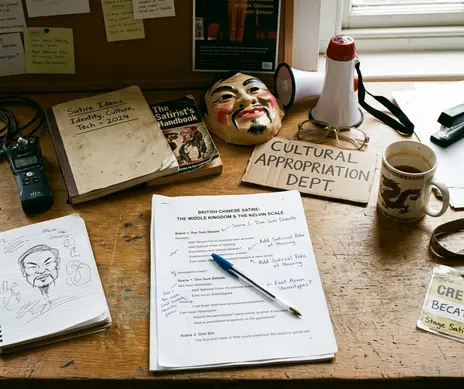
Artistic response proved just as vital as political organization. Daniel York channeled the collective frustration into a razor-sharp theatrical critique with his play The Fu Manchu Complex. Staged during an October 2013 production run at an independent fringe venue, Ovalhouse, the play took direct aim at the late 19th-century origins of the 'Yellow Peril' literary trope.
York chose satirical inversion over staging a conventional historical drama. The production employed the theatrical technique of 'whitening up', a pointed reversal of the historical conventions that had long excluded East Asian actors. By donning white face paint to play Caucasian characters, the cast exposed the absurdity of historical casting tropes. The play also tackled the quiet counterpart to the cartoon villain: the model minority stereotype. This pervasive myth of the high-achieving, silent, and invisible Asian immigrant was dismantled on stage, revealing how both extremes serve to strip East Asian people of their complex humanity.
Building Its Own Stage
While the protests challenged existing power structures, the community simultaneously focused on building its own infrastructure. Yellow Earth Theatre, the foundational East Asian theatre network established in 1995, served as the institutional backbone during this period. They shifted developmental focus from petitioning major venues to creating site-specific platforms that could directly engage the diaspora audience.
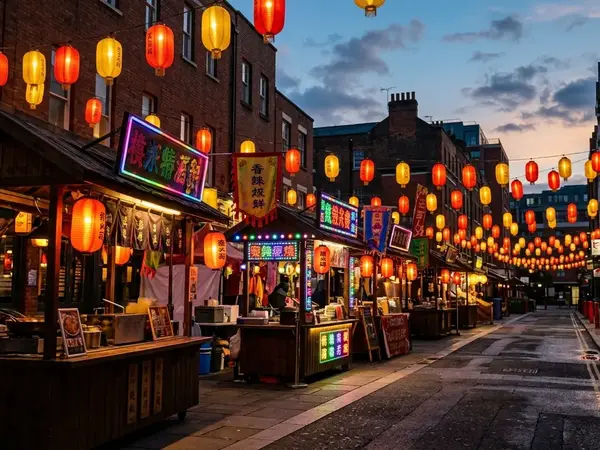
Programs like YLab and the Dim Sum Nights platform incubated new writing. Thanh Le Dang's Theef, staged during Dim Sum Nights 3 at the New World restaurant in October 2013, exemplified this approach. Bringing the performance into a bustling Chinatown restaurant created an immediate, visceral connection with the audience. The effectiveness of site-specific performances varied heavily depending on the venue's acoustic limitations and the existing foot traffic of the local diaspora community. Yet, the cultural resonance was undeniable.
Simultaneously, breakthroughs were happening on traditional stages. Benedict Wong led the cast of The Arrest of Ai Weiwei by Howard Brenton. This April to May 2013 mainstage run at the Hampstead Theatre placed a contemporary political East Asian story on a major stage, anchored by East Asian leads.
But Was It Just a One-Off Row?
Critics at the time frequently framed the RSC protest as a single grievance. They argued that once the news cycle moved on, the momentum would dissipate. In our review of the period, evaluating the critical reception of the protests requires looking beyond the mainstream broadsheets.
The community countered the narrative that the momentum had fizzled out by producing sustained academic and artistic outputs. The short film Orphan of Zhao Redux and dedicated coverage in the Contemporary Theatre Review documented the ongoing struggle. The 2012 to 2014 timeframe saw a relentless wave of organizational pushback that refused to be ignored.
Caution: We must acknowledge a historical limitation. The momentum generated during this specific window primarily impacted independent and fringe productions, while systemic casting changes at top-tier classical institutions remained sluggish for several more years.
The Voice It Found
The voice of British East Asian theatre was not granted by benevolent institutions. It was claimed by the artists themselves. The multi-year arc spanning late 2012 through the end of 2014 illustrates a profound transition from initial protest letters to the establishment of dedicated development programs.
This era proved that community-led infrastructure holds more lasting power than temporary institutional concessions. The artists who gathered at the Young Vic, who satirized Victorian villains at Ovalhouse, and who performed between tables in Chinatown restaurants laid an unshakable foundation. They ensured that the next generation of British East Asian theatre-makers would inherit a landscape where their right to the stage was no longer a question, but a starting point.






Share Your Opinion