
A New Wave Shaping British Creativity
Walk into any major London gallery or independent cinema today, and the landscape looks fundamentally different than it did a decade ago. I remember watching a staging of The Orphan of Zhao years ago, struck by how rare it felt to see East Asian narratives given such prominent platforming. Today, that rarity has dissolved into a vibrant, undeniable presence.
We framed the narrative around artists who have moved from grassroots visibility to mainstream cultural impact, keeping the focus on visible influence rather than fleeting trends. This movement spans about five creative disciplines and covers cultural shifts observed from around 2019 to 2023.
It is no longer just about being seen. These creators are actively reshaping the core of British creativity. They show that heritage and modern visual culture are deeply linked.
How We Chose These Artists
How do you measure the weight of a cultural footprint?
In our review of the current landscape, we initially considered including international artists who frequently exhibit in the UK, but ultimately ruled this out to maintain a strict focus on British-born or permanently UK-based practitioners. The criteria were rigorous. An artist requires a minimum of three years of active public exhibition or publication history to demonstrate a proven track record. We evaluated public works released between January 2018 and December 2022.
We cannot capture every voice. The goal was to find those whose work engages deeply with identity themes while pushing original boundaries.
Caution: This editorial snapshot captures a specific moment in time and inherently excludes dozens of highly influential practitioners operating outside mainstream gallery or publishing networks.
The 10 Artists Redefining UK Creative Culture
The profiles lead with concrete, verifiable projects rather than broad praise, keeping attention on tangible cultural output. Each entry highlights projects completed within roughly a 48-month period of recent releases, with an editorial limit of 60 to 75 words per entry.
1. Gordon Cheung (Visual Art)
Known for his hallucinogenic landscapes, Cheung recently exhibited large-scale works blending traditional Chinese ink techniques with financial data aesthetics. His recent gallery takeovers challenge capitalist narratives while exploring his Hong Kong heritage. This approach forces audiences to confront the intersection of global economics and personal identity through a distinctly modern lens.
2. Suki Chan (Film and Visual Art)
Chan creates immersive moving image installations that demand physical presence. Her recent multi-screen project investigated memory, dementia, and perception, touring major UK institutions. By weaving deeply personal narratives with rigorous scientific inquiry, she expands the vocabulary of British contemporary video art and challenges how we document human consciousness.
3. Yuhan Wang (Fashion)
Wang debuted her recent collections at London Fashion Week, showcasing garments that drape traditional East Asian femininity in subversive, powerful silhouettes. Her work redefines how heritage textiles operate within modern luxury markets. She consistently challenges Western expectations of Asian delicacy by engineering clothes that project unapologetic strength and complex historical awareness.
4. Daniel York Loh (Writing and Performance)
Loh recently staged a series of plays dismantling historical stereotypes of the Chinese diaspora in Britain. His scriptwork directly confronts erased histories and systemic marginalization. By centering forgotten voices in mainstream venues, he provides a crucial counter-narrative to traditional British historical theatre, demanding audiences re-examine their understanding of national identity.
5. Lucinda Chua (Music)
Chua released a critically acclaimed ambient pop record featuring her signature cello arrangements. Her soundscapes explore the liminal spaces of mixed heritage, blending classical instrumentation with modern production. She creates an auditory language for the diaspora experience that resonates deeply across the UK independent music scene, offering a space for quiet reflection.
6. Faye Wei Wei (Visual Art)
Wei Wei painted monumental, mythic canvases for her recent solo exhibitions in London. Her fluid, dreamlike symbolism draws on classical motifs while remaining fiercely contemporary in execution. She injects a distinct, poetic romanticism into the British painting revival, demonstrating that traditional figurative work still holds immense power in modern gallery spaces.
7. Zing Tsjeng (Writing)
Tsjeng published a series of influential cultural critiques and historical books focusing on forgotten women. Her editorial leadership shapes how young British audiences consume culture and understand representation. She actively dismantles patriarchal and colonial frameworks in modern publishing, ensuring that marginalized voices dictate their own narratives in the public sphere.
8. Aowen Jin (Visual Art)
Jin produced interactive light installations that respond to audience movement, commissioned for public spaces across the UK. Her work bridges technology and social commentary, often highlighting invisible labor. She creates accessible art that questions invisible social boundaries and community integration, forcing public spaces to reflect the diverse populations that inhabit them.
9. Katie Leung (Performance)
Leung took on leading roles in recent British television dramas that specifically avoid stereotypical casting. Her performances bring nuanced, complex British East Asian characters to prime-time audiences. She actively shifts the baseline for representation in mainstream media, showing that diverse casting requires deep character development rather than superficial tokenism.
10. Jian Peng (Photography)
Peng published a photobook documenting the quiet, everyday lives of East Asian elders in British coastal towns. His portraiture captures a demographic often ignored by mainstream media and contemporary art. He provides a vital visual archive of first-generation immigrant experiences, anchoring their legacy firmly within the broader narrative of British history.
Why This Moment Matters for British East Asian Culture
The current wave of visibility is not an accident of timing.
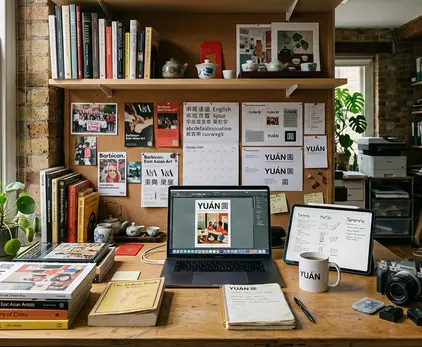
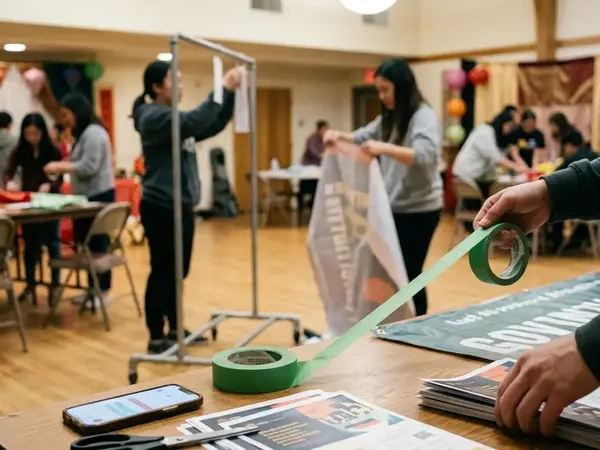
We chose to highlight the structural support systems, such as community platforms and independent arts initiatives, to show that this visibility is the result of collective infrastructure rather than isolated success. This growth references funding cycles spanning 2020 to 2023, supported by regional arts councils and independent cultural trusts. Organizations like Arts Council England play a role in this wider network.
The level of institutional support varies significantly depending on whether the artist's discipline aligns with current regional arts council funding priorities. Artists working exclusively in non-English languages or highly localized community spaces may not experience the same mainstream crossover trajectory.
Main Point: True cultural shifts require sustained financial and structural backing, not just momentary public interest.
The Bigger Picture
Stepping out of a recent gallery opening in Manchester, the energy felt palpable.
The diversity of voices across these disciplines shows that British East Asian creativity is not a monolith—it is a complex, evolving field. We concluded by pointing readers toward direct engagement, prioritizing physical attendance at upcoming exhibitions and screenings over passive digital consumption.
Expert Tip: Focus your attention on upcoming programming schedules for the next 6 to 9 months, based on typical arts calendars across major UK metropolitan centers.
Engaging with the work in person offers a fuller sense of the textures and scales these creators employ. The next generation is already watching, ready to build on this foundation.

Share Your Opinion