
Can a Pot Say Something New About Being British and East Asian?
What happens when British East Asian makers move clay past the Ming-vase cliché and into personal, contemporary work? The contrast between the antique Chinese porcelain that dominates the auction imagination and the living studio practice reshaping UK galleries is increasingly visible.
Drawing on an analysis of gallery acquisitions of contemporary diaspora ceramics in recent years, a steady departure from historical reproduction emerges. Buyers and curators are actively seeking narratives of migration and dual heritage. This article tracks the money, the makers, and the cultural shift, without pretending old porcelain and new work are the same market. The focus remains strictly on living studio practice rather than historical antiques.
The Long Shadow of the Ming Vase
Walk past any major London auction house during Asia Week, and the public perception of 'Chinese ceramics' becomes immediately clear. Record-breaking Qing and Ming lots dominate the saleroom headlines, reinforcing a very specific aesthetic expectation. This antiques and imperial-porcelain market operates on entirely different economic principles than contemporary studio ceramics.
Relying on provenance documentation spanning roughly three centuries, recent auction cycles saw immense capital flow into historical rarity. A common failure case is assuming high auction prices for historical antiques trickle down to support living makers. They do not. The secondary market for imperial porcelain exists in a closed loop of collectors and investors.
Historical tropes shaped gallery expectations of what East Asian makers should produce for decades. The blue-and-white vase and the 'Oriental' motif became a rigid mold, forcing many artists to choose between commercial viability and authentic expression.
Meet the New Generation of British East Asian Ceramicists
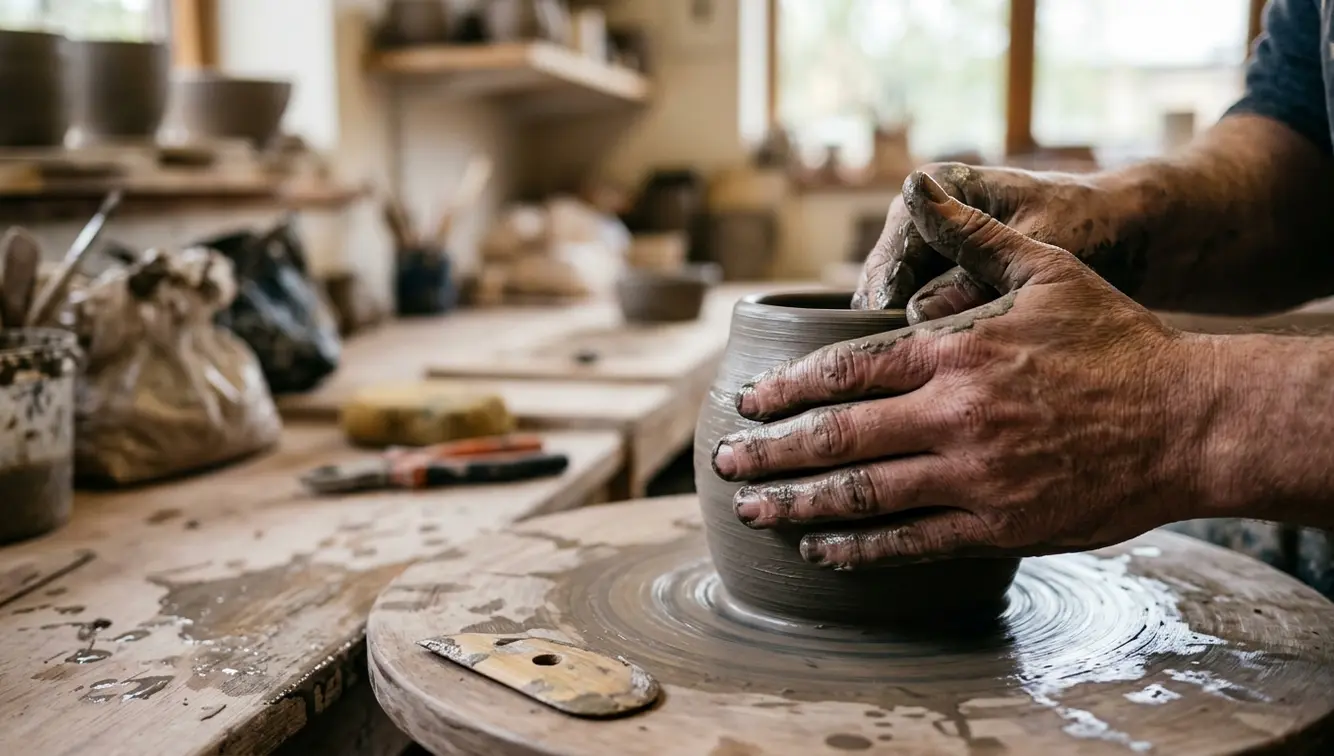
A distinct shift is occurring toward makers who trained at UK art schools and root their work in personal narrative rather than reproduction. Recent degree show exhibitions highlighted a generation exploring family memory, diaspora identity, and food culture. These artists rework traditional forms and glazes in a contemporary idiom, creating pieces that speak to a dual heritage.

The physical labor remains intense—wood-firing schedules requiring about 48 to 72 hours of continuous stoking demand absolute dedication to the craft. The resulting practice spans functional tableware, sculptural vessels, and installation work, helping broaden their market appeal. By diversifying their output, makers can reach different types of buyers simultaneously, from casual collectors seeking daily-use items to institutions acquiring major sculptural statements.
Following the Money: Galleries, Fairs and Studio Sales
Consider the practical economic routes for contemporary ceramicists today. Independent galleries, craft fairs, and direct commissions form the backbone of a working studio. The studio-craft market economics rely on direct relationships, limited editions, and repeat buyers. This contrasts sharply with the antiques auction model discussed earlier.
Consignment agreements typically take a standard gallery commission from the retail price, making direct sales highly attractive for artists trying to sustain a practice in expensive urban centers. Recent studio sale cycles have demonstrated the financial viability of bypassing the middleman.
Direct studio sales depend heavily on the maker's existing digital audience and independent marketing reach. Gallery representation still serves as a credibility and pricing signal, helping artists reach collectors who might not discover them through social media alone.
Away from Tropes: The Cultural Reframing of the Work
Curators and buyers are moving away from an 'exotic craft' framing toward reading the work as contemporary British art. British East Asian identity in the work is no longer a performance of heritage for a Western gaze. Makers reclaim traditional techniques as a deeply personal language.
Recent acquisition committee reviews have focused on how artists adapt historical methods for modern contexts. Celadon glaze formulations adapted for local UK clay bodies represent a physical merging of dual heritage, literally binding East Asian chemistry with British earth. Sustained UK museum and public collecting interest over consecutive acquisition cycles signals a lasting reframing rather than a passing trend.
The narrative is moving past familiar historical tragedies like The Orphan of Zhao toward lived, contemporary experiences. One catch: this institutional reframing remains largely confined to major metropolitan galleries, leaving makers in regional markets still navigating pressure to produce legibly 'Oriental' motifs to secure representation.
For Readers Who Want to Collect or Follow the Field
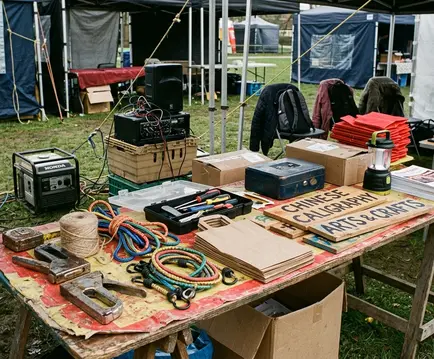
Finding and supporting this work requires knowing where to look and what to ask. Craft fairs scheduled throughout the autumn season offer a useful way to see the work in person and meet the makers directly. Collecting at accessible price points often starts at degree shows and independent galleries, where emerging talent first enters the market.
When evaluating a piece, look for the maker's statement, the provenance of the technique, and the edition size. Based on typical values, edition sizes ranging from 5 to 25 pieces offer a balance of accessibility and exclusivity, allowing collectors to acquire meaningful work without competing against institutional budgets.
Expert Tip: Supporting living makers directly versus buying at auction changes the economic reality for the artist. Direct purchases fund studio rent and material costs, whereas secondary market sales only benefit the previous owner.
So What Will We Choose to Value?
The market is shifting, but its direction depends entirely on what buyers, curators, and audiences choose to reward. The pull of the record-breaking antique remains strong, yet the quiet economics of the living studio offer a different kind of cultural wealth.
Direct studio purchases bypassing secondary market premiums provide a direct route to put capital into the hands of creators. This is the kind of shift myasianplanet's editorial team tracks across British East Asian arts, observing how diaspora arts funding in recent years has seeded a new landscape of independent practice. The choice between preserving the past and funding the future is now in the hands of the collector.
When you look at a piece of contemporary British East Asian ceramics, are you buying a reflection of history, or are you investing in the voice of a living maker?






Share Your Opinion