
The Reality of Day Three in South London
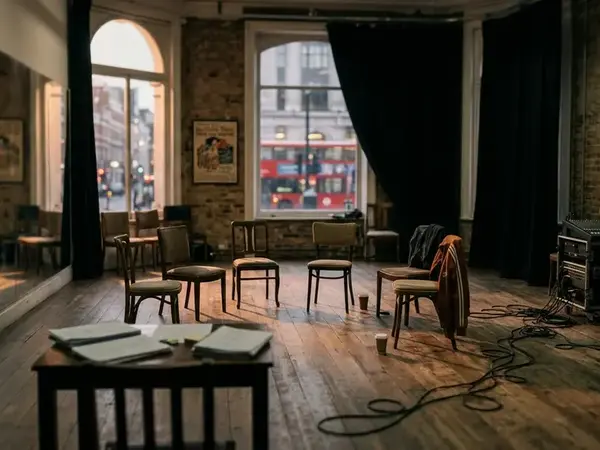
A Thermos of sesame oil chicken soup sits cooling on a plywood coffee table. Across the room, a newborn sleeps soundly in a woven moses basket while rain beats steadily against the sash window. Propped up against a stack of muslin cloths, a phone screen shows a mother in Taipei, carefully supervising the morning's confinement routine via video call.
This is the modern reality of a British-Taiwanese, second-generation mother navigating her postpartum recovery in a one-bedroom flat. There is no spare room for a visiting grandmother. Her partner has exactly two weeks of statutory paternity leave before returning to the office. She wanted the traditional thirty-day confinement period her mother and grandmother experienced, but she had to build it inside a city that does not pause for new mothers.
She decided to document her worked example of adapting zuo yuezi to establish a practical middle ground between her mother's traditional experience in Taipei and the realities of a modern household. The tension was immediate. The ancient blueprint demands stillness, while London demands momentum.
The Core Logic of the First Month
To understand the adaptation, you have to understand the baseline. Zuo yuezi translates roughly to 'sitting the month'. It requires a 28 to 30-day period of indoor rest where the new mother is entirely relieved of household work. The primary goal is physical rehabilitation.
Warmth must be kept in, and cold must be kept out. Meals are cooked specifically to rebuild qi and blood, relying heavily on warming ingredients. The prohibitions she grew up hearing are absolute. Zero cold drinks or raw foods. No washing the hair. No draughts. No heavy lifting. Minimal visitors.
These practices share a common foundation across East Asia, though the execution varies. Cantonese families rely on pui yuet traditions, modern Taiwanese parents often book into luxury postpartum centres, and Korean mothers observe samchilil. She evaluated the core logic of rest, insulation, and being fed by others to determine which ancestral rules could be translated into a modern urban environment without flattening them into a single, inflexible rulebook.
When the Blueprint Meets a Second-Floor Walk-Up
The failure points arrived within the first week. The most glaring absence was a live-in elder to manage the household. Her mother's flight from Taiwan was short-notice and short-stay, leaving a massive logistical gap.
The physical environment actively fought the tradition. A draughty second-floor walk-up flat makes avoiding the cold nearly impossible. The kitchen was simply too small for all-day soup-making, lacking the burner space required for continuous simmering. Her mother-in-law generously offered help, but arrived with a completely different, Western-leaning postpartum menu that clashed with the warming foods required by zuo yuezi.
Then came the weather. A July heatwave forced the abandonment of the traditional thirty-day hair-washing ban. In an un-air-conditioned flat, strict adherence caused more physical distress than healing. Medical realities also intervened. A mandatory midwife appointment on day six meant leaving the house, breaking the strict indoor confinement rule before the first week was out.
The deepest challenge was the isolation. Strict confinement plus no extended family nearby produced silence, rather than restorative rest. Well-meaning friends assumed 'she's resting' meant 'don't come', leaving the couple entirely alone with a newborn.
Drawing the Line at Fourteen Days
Survival required ruthless prioritization. She kept the rules that provided immediate comfort and discarded those that caused friction. Staying warm remained non-negotiable. Thermal layers and socks stayed on indoors, ensuring no bare feet ever touched the bathroom tile. She consumed no cold drinks. She did zero cooking or cleaning for the first fortnight, and enforced a hard limit on visitors before day fourteen.
Other rules required heavy rewriting. She replaced the month-long hair-washing ban with a pragmatic alternative: a quick wash with water heated hot, ginger boiled into the rinse, and hair dried immediately with a hairdryer.
She also rewrote the housebound rule. Fourteen days fully indoors was the commitment before attempting short, warm-weather walks to the end of the road, always wearing a scarf to protect against the wind. She built up her stamina gradually before the month was out.
Structuring the Feeding Rota
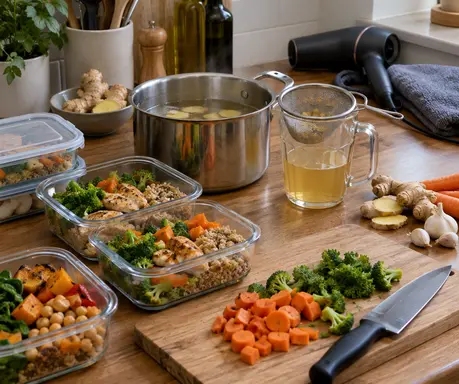
Because she was limited to postpartum recovery adaptations where the absence of a live-in elder necessitates freezing soup bases, preparation started early. She structured the feeding rota by batch-cooking soup bases in the final 14 to 21 days of pregnancy. A shared spreadsheet coordinated meal deliveries from two friends and a cousin, ensuring a steady supply of fresh food without overwhelming the small flat with visitors.
Curating the Postpartum Pantry
The menu required just as much editing as the house rules. The shortlist that survived the transition to London included sesame oil chicken (má yóu jī), simple ginger and rice wine broths, and red date and longan tea kept in a flask as an all-day warm drink. Pork liver and kidney dishes made the cut for the early days to replenish iron.
She dropped dishes requiring hours of simmering. Hard-to-source cuts of meat were abandoned. Anything that made a shared-stairwell flat smell for days was immediately vetoed.
She selected ingredients by prioritizing quick-heating broths kept in a night flask for night feeds occurring between 11:00 PM and 4:00 AM. During those quiet hours, with a tablet propped against the flask playing a recorded performance of The Orphan of Zhao, the cultural connection felt tangible even in the dark of South London. Efficiency was paramount; she developed one soup base that adapted into three distinct variations to prevent palate fatigue.
Sourcing in the UK required a hybrid approach. Specific dried goods came from Chinatown and the Vietnamese supermarkets in Hackney. Heavier items arrived by post. She substituted local ingredients where necessary, focusing on the warming properties of the food rather than rigid adherence to a recipe.
Integrating herbal formulas like sheng hua tang into a modern recovery plan demands prior clearance from a qualified practitioner and full disclosure to a midwife, as active compounds can interact unpredictably with prescribed postpartum medications or transfer during breastfeeding. Always consult NHS guidance on recovery after birth alongside any traditional practices.
Building a Village Across Time Zones
Replacing the traditional support network requires capital, creativity, or both. The most direct substitute for a live-in elder is a hired confinement nanny. She booked a yue sao for eight days of hired help rather than the full month. Good practitioners go early in UK cities, requiring booking months in advance.
Costs vary widely by city and by whether the role is live-in, daytime, or cooking-only. You must ask for a written list of duties before agreeing to anything, since the title means vastly different things to different agencies.
She layered this paid help with free and low-cost support. A WhatsApp group with two other new mothers from an antenatal class provided emotional grounding. Dinners for a week came through a church-run meal train. A cousin took over the weekly Chinatown shop.
To bridge the 6,000-mile distance to Taipei, she managed the time difference by setting a fixed daily video-call window. Her mother used this time to supervise the cooking process remotely, offering guidance on the color of the broth and the exact moment to add the rice wine.
The Final Shape of a Modern Confinement
Her adapted month found its rhythm through compromise. The final shape looked like this: fourteen strict days indoors, a rewritten hair rule, a freezer full of soup bases, eight days of hired help, and a scarf for short walks in week three.
Looking back, she identified one major structural change she would make for a future pregnancy. She would shift the hired help to weeks three and four of the postpartum period instead of week one. The initial adrenaline carries you through the first few days, but the deep exhaustion sets in later, exactly when the partner's paternity leave ends.
Every rule kept costs something in freedom, comfort, or money. Every rule dropped costs something in family expectation and the profound feeling of being held by an ancient tradition. You have to weigh those costs against the reality of your own living room.
When you look at the resources available in your own city, which piece of your heritage will you insist on keeping, and which will you leave behind to make room for your actual life?






Share Your Opinion