
The Fragrant Legacy of a Well-Kept Lou Sui
A well-kept lou sui transforms a plain chicken thigh, a block of firm tofu, or six peeled eggs into a glossy, five-spice-deep dinner. A master stock is less a standard recipe than an ongoing kitchen habit. This process yields a complete, deeply flavoured meal in 45 to 55 minutes of cooking time — a fraction of the effort required for a traditional Sunday roast. The liquid gets richer, heavier, and more complex each time you use it.
A master stock operates as a living soy-and-spice braising liquid that you reuse rather than discard. You strain the broth, re-boil it to sterilize the contents, and store it carefully between cooking sessions. The stakes for maintaining this liquid are high. A stock left to sit unboiled in a warm kitchen overnight will sour by morning. Topping up the pot carelessly with raw marinade introduces impurities that ruin the delicate balance.
When these mistakes happen, the entire batch must go down the drain. That single error takes months of accumulated flavour, rendered fat, and careful tending with it. The true cost of this culinary tradition is consistent weekly attention, demanding a rhythm that rewards patience and precision.
Building the Structural Layers of Soy and Spice
A master stock relies on three distinct structural layers to build its foundational flavour profile. The base requires a precise blend of soy sauces, using light soy for sharp salinity and dark soy for deep colour and body. Rock sugar provides a glossy finish on the braised meats, whereas standard white sugar would only offer a flat, one-dimensional sweetness.
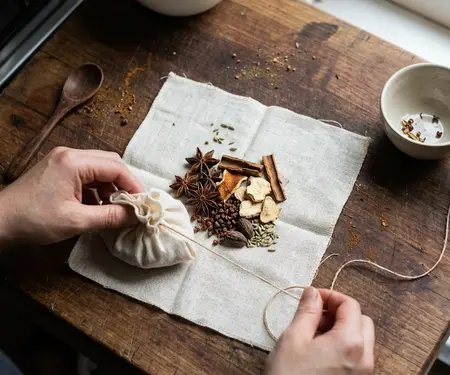
The fragrant layer lives entirely inside a tied muslin bag. The core dry blend calls for seven specific ingredients to achieve the correct aromatic balance. You need star anise for sweet depth, dried tangerine peel to cut through heavy rendered fat, cassia bark, fennel seed, sand ginger, white peppercorns, and cloves. Sand ginger adds a distinct, almost medicinal earthiness that anchors the sweeter spices. The dried tangerine peel requires soaking before use; it releases citrus oils that prevent the final dish from tasting cloying. Cloves require careful measurement because they easily overpower the entire pot if left unchecked.
Opting for whole spices tied in a removable bag prevents the gritty residue and bitter sludge that supermarket ground five-spice rapidly leaves behind. Three fresh aromatics go into the pot loose during the boil: bruised ginger, spring onion whites, and a smashed garlic clove. You fish these fresh ingredients out before storing the liquid.
Selecting the Vessel and Blanching the Bones
How do you establish a foundation that can withstand years of repeated boiling and cooling? The selection of the cooking vessel prioritizes heat retention and surface area above all else. Heavy clay pots or enamelled cast iron work well for this task. Wide, shallow pans accelerate evaporation too quickly, reducing your precious stock to a salty syrup. Non-stick surfaces inevitably scratch under the constant scraping of a metal ladle. While heavy clay pots offer strong heat retention for this process, enamelled cast iron provides an effective alternative for modern domestic hobs.
You build the liquid using water or unsalted chicken stock as the body, adding the soy and rock sugar to taste. The goal is a liquid that tastes slightly too salty on its own, as the cooking protein will pull salt out of the broth during the braise.
Blanching the bones is a mandatory first step. Cover the chicken or pork bones with cold water, bring the pot to a boil, pour away the grey scum, and rinse the meat thoroughly. The grey scum consists of coagulated blood and proteins from the bones. If left in the pot, these proteins dissolve into the liquid, creating a murky, sour-tasting broth that spoils quickly. This single initial blanching step dictates whether a home stock stays clear or turns permanently cloudy. The base then requires roughly 90 to 120 minutes of bare simmering time to extract the foundational flavours.
Maturing the Liquid Through Collagen and Fat
A newly made stock tastes distinctly thin and lacks the mouthfeel of a mature braising liquid. Gelatine and rendered fat from repeated braising of skin-on proteins alter the liquid's viscosity over time. These elements give the broth the lip-sticking body that soy sauce and water alone cannot provide.
Four early candidate proteins work best for building this essential texture: whole chicken thighs, soy-braised eggs, firm tofu, and pork belly. These ingredients are forgiving for beginners and cook relatively quickly. The feeding rhythm depends entirely on careful observation of the liquid's volume and taste. You top up the pot with water or unsalted stock to replace evaporation after every session. You must refresh the soy and rock sugar by taste each time you add new liquid.
The spice bag generally needs replacement every 4 to 5 braising sessions. This rotation maintains the aromatic high notes without letting the bitter tannins from the old spices muddy the water.
The Non-Negotiable Cycle of Straining and Cooling
The longevity of your master stock depends entirely on strict hygiene and temperature control. The non-negotiable cycle after every cook requires straining out all loose solids, skimming the excess fat, and bringing the liquid back to a full rolling boil. This active maintenance takes 8 to 12 minutes.
Skimming requires patience. Push a ladle gently just below the surface of the liquid, allowing the golden layer of rendered fat to spill over the rim while leaving the dark soy broth behind. Leaving too much fat creates a greasy mouthfeel, but removing all of it strips away the carrier for your fat-soluble spices.
The cooling protocol must accommodate domestic kitchen realities. Attempting to mimic restaurant kitchens by keeping the lou sui hot on a low flame all day is unsuited to domestic kitchens without constant temperature monitoring and daily service volume. Instead, decant the boiling liquid into a shallow container and sit it in a sink of cold water. This rapid temperature drop prevents the stock from lingering in the bacterial danger zone.
Following the Food Standards Agency guidance on cooling and reheating cooked food, you then move the container directly to the fridge. Refrigerator storage suits 3 to 4 day usage cycles. Freezer storage extends the safety window to 28 to 35 day usage cycles for those who cook less frequently.
Master Stock Maintenance & Safety Checklist
- Strain out all loose solids and fresh aromatics immediately after cooking.
- Skim excess rendered fat from the surface to prevent a greasy mouthfeel.
- Bring the strained liquid back to a full, rolling boil for at least three minutes.
- Cool rapidly using a cold water sink bath before refrigerating.
Sequencing a Single-Pot Dinner
What does the actual cooking process look like once the base is established and resting in your fridge? A single-pot meal sequence maximizes efficiency by staggering the introduction of ingredients based on their cooking times.
Bring the cold stock to a bare simmer on the stove. Poach bone-in chicken thighs for 20 to 25 minutes, ensuring the liquid never reaches a violent boil that would toughen the meat. Turn off the heat and let the chicken rest in the hot liquid to absorb the maximum amount of flavour. The resting phase uses carry-over cooking. Residual heat gently finishes cooking the chicken thighs all the way to the bone, resulting in a silky, tender texture that aggressive boiling destroys.
Slide in peeled soft-boiled eggs and thick slices of firm tofu for this final resting stretch. Quick-cooking items absorb colour rapidly and need far less time submerged than the raw meat. To finish the dish, remove the chicken and slice it cleanly through the bone. Spoon over 2 to 3 tablespoons of the hot stock loosened with a few drops of toasted sesame oil. Pair the glossy meat and tofu with blanched choi sum and freshly steamed jasmine rice.
Charting the Trajectory of Your Kitchen Habit
The pot serves as a running record of your kitchen habits and seasonal cravings, unfolding with the slow, deliberate pacing of The Orphan of Zhao. You will remember the heavy pork belly weeks of winter, the five-spice-heavy autumns, and the specific batch where you overdid the cloves.
The trajectory of the stock depends entirely on your routine and commitment. Making a weekly commitment to braising fatty, collagen-rich proteins develops the stock rapidly, building a profound depth of flavour in about a month. Choosing to freeze the liquid in portions offers a slower, safer maturing curve. This frozen method takes 12 to 24 weeks for a noticeable change in depth and viscosity.
Both paths yield an exceptional braising liquid over time — the decision comes down to how much active maintenance you want to perform. Which pot are you actually prepared to look after: the weekly one on the shelf, or the monthly one in the freezer?











Share Your Opinion