
The Rose Quartz Tool That Started an Argument
The visceral memory of my grandmother’s ceramic soup spoon scraping across a family member's back stands in stark contrast to the later viral explosion of facial tools. I remember the sharp smell of medicinal oil filling the living room. The rhythmic, firm pressure applied to the skin was an act of care, a remedy for the first signs of a cold or deep muscle ache. The friction generated heat, drawing blood to the surface to clear the pathways.
Suddenly, social media feeds filled with roughly 5mm thick rose quartz and amethyst carved boards. Influencers praised these smooth stones for their ability to sculpt jawlines and depuff morning skin. The unboxing videos featured pastel packaging and serene background music—a far cry from the practical, utilitarian environment where I first learned the technique.
Seeing a deeply rooted family practice repackaged as a quick aesthetic fix felt jarring. Separating a healing practice from its cultural context represents a profound loss. Heritage belongs at the center of the conversation about our beauty rituals.
When a tradition loses its history, the communities that sustained it often lose their voice in how it evolves. The transition from a household remedy to a luxury commodity happened almost overnight, shifting the power dynamic of who gets to define the practice.
Before the Jade Roller: Where Gua Sha Actually Comes From
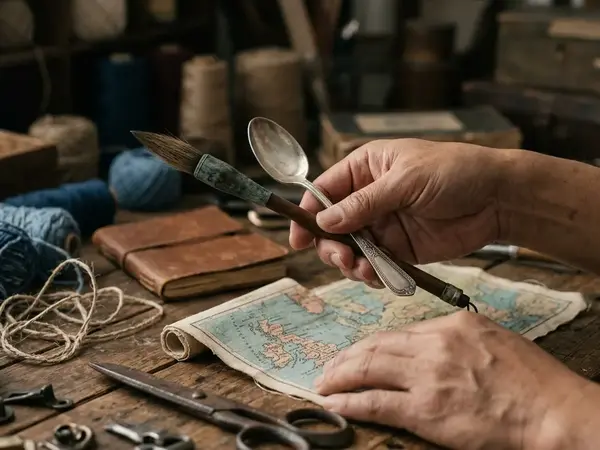
Gua Sha originates in Traditional Chinese Medicine, where the term translates directly to 'scraping sha'. Historical records show that practitioners during the Ming Dynasty period, spanning 1368 to 1644, relied on everyday household items to perform the technique. They used porcelain soup spoons and brass coins with square holes to scrape the skin.
The primary goal centered on moving stagnation, relieving fever, and treating acute pain. The wellness industry now largely avoids the deliberate red marks, known as sha, that indicate a successful treatment.
The practice eventually migrated into Western spas and social media feeds as a lymphatic-drainage facial hack. This shift stripped away the diagnostic and therapeutic meaning that defined the technique for centuries. As families migrated across the globe, they carried these practical healing methods with them, adapting to new environments while preserving the core principles of the treatment.
Assuming all East Asian diaspora members share the exact same relationship or historical knowledge of TCM practices oversimplifies a vast cultural landscape. Yet, the collective memory of the scraping mechanism remains a distinct therapeutic root for many. The tools themselves were never meant to be precious objects kept in skincare fridges. They were utilitarian instruments, chosen for their smooth edges and ability to create friction.
What Disappears When a Practice Is Rebranded
What exactly vanishes when a complex medical system becomes a morning skincare routine? The specific language, the trained practitioners, and the foundational theory of qi and meridians disappear into a simplified promise of 'de-puffing'. Decontextualisation flattens a knowledge system built over centuries into a single aesthetic outcome.
The economic dimension reveals a stark disparity. During the rapid commercial expansion of the late 2010s and early 2020s, wholesale stone tools purchased for about £1.50 to £3.00 routinely retailed for upwards of £35, sometimes reaching £60. Brands profit immensely from the practice while rarely crediting or employing the communities that originated it.
Recognising Commercial Erasure
The supply chain of wellness tools highlights a deep financial disconnect between the originators and the current profiteers. Marketing campaigns often use vague, mystical language to sell these stones, completely bypassing the rigorous medical framework they belong to.
This critique targets the commercial wellness infrastructure that mass-produces these tools, rather than individual consumers who adopted the practice seeking affordable skincare. Words like 'contouring' and 'sculpting' replace discussions of blood flow and energy pathways. The erasure happens quietly, one beautifully packaged product at a time.
But Isn't Sharing Culture a Good Thing?
Conversations with diaspora peers often reveal a shared conflict about gatekeeping. Cultural exchange helps traditions survive and spread across borders. A clear distinction exists between appreciation and extraction.
Sharing credits its source and invites mutual understanding. Extraction erases the origins to make a product more palatable to a new audience. Consider how adapting a classic play like The Orphan of Zhao requires a deep understanding of its historical weight to resonate authentically. The play carries centuries of thematic weight regarding loyalty and sacrifice; stripping it down to a simple revenge plot would rob it of its power. Adopting a physical practice demands a similar respect for its context.
Based on typical values, traditional body sessions lasting 30 to 45 minutes have been replaced by abbreviated cosmetic facial routines condensed to 3 to 5 minutes. The logic that reduces a medical treatment to 'just a beauty tool' quietly hollows out other diaspora practices, leaving only the most marketable fragments behind.
We see this pattern repeated across various wellness trends, where the aesthetic appeal takes precedence over the foundational knowledge. The emotional toll of watching a cultural touchstone become a fleeting trend is significant. The desire to share our culture is strong, provided the exchange remains equitable and grounded in mutual respect.
How to Use Gua Sha Without Erasing It
Readers who want to keep using Gua Sha can take practical steps to honor its origins. Learning the actual name and history grounds the practice in reality. Buying from makers connected to the tradition supports community-led businesses.

Honouring The Technique
Proper technique requires holding the tool at a 15 to 45 degree angle flat against the skin. Curiosity about the fuller practice, including body work and the meaning of the marks, enriches the experience far beyond the facial-sculpting version.
Anyone seeking benefits beyond gentle cosmetic use should consult a qualified TCM practitioner. Initial TCM consultations lasting 60 to 90 minutes provide the necessary diagnostic framework to treat underlying conditions safely. During these sessions, practitioners assess pulse, examine the tongue, and discuss comprehensive health histories before ever applying a tool to the skin.
Keeping the medical and cosmetic lines clear ensures the tradition retains its integrity. Supporting practitioners who have dedicated years to studying TCM helps sustain the knowledge system. Education remains the most effective tool against cultural erasure.
The Marks the Trend Left Out
How does a healing tradition survive when its most visible outcome becomes a flaw to be hidden? The viral version of Gua Sha was designed to eliminate the very thing the traditional practice deliberately raises.
The trend borrowed the tool and edited out the part that carried the meaning. The variation in how 'sha' presents depends heavily on the specific meridian being treated and the individual's underlying health condition.
The friction between traditional healing and modern aesthetic sanitization becomes undeniable when looking at the physical results of a genuine session. The true mark of the practice is extravasated blood in the subcutis presenting as reddish petechiae, with a typical fading time of 3 to 7 days.


Share Your Opinion