
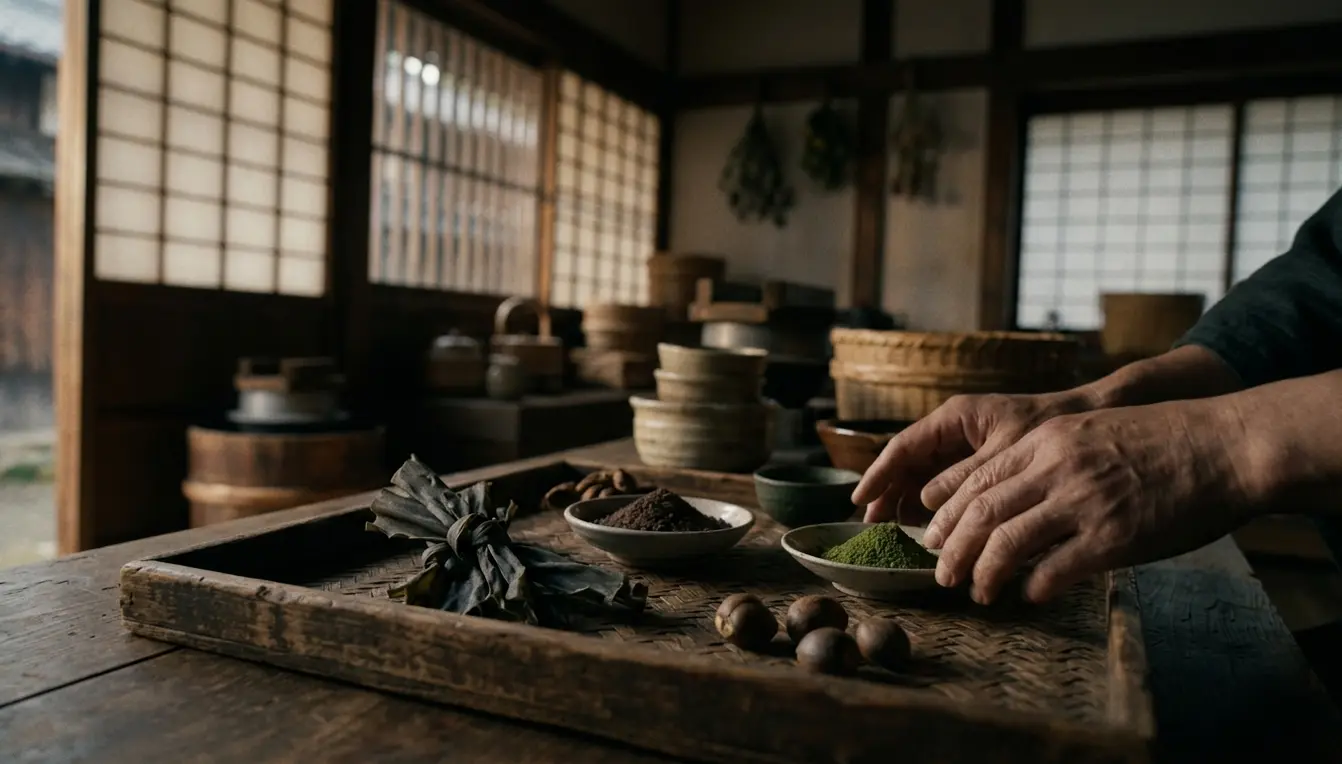
Why Japanese Beauty Rituals Endure
How do centuries-old botanical practices survive in an era dominated by synthetic skincare? The answer lies in historical continuity and a careful focus on lipid-barrier preservation. Rather than chasing modern synthetic trends, traditional Japanese regimens prioritize maintaining the skin's acid mantle at roughly pH 4.5 to 5.5. Much like the environmental controls required in fermentation, this acidic range influences the success of the entire biological system.
Historical usage of tsubaki yu dates back to the Heian period, commonly dated to 794 to 1185. Court women utilized these raw botanical extracts long before modern cosmetic chemistry codified their benefits. This piece looks at that historical continuity rather than modern synthetic trends, focusing entirely on lipid-barrier preservation.
This guide translates these historical ingredients into a practical, at-home methodology. You will find no promises of overnight transformations here. Instead, expect a technical breakdown of how to use these raw materials effectively.
Camellia Flower Oil (Tsubaki Yu): A Core Ingredient
Consider the extraction of tsubaki yu, the Japanese name for camellia flower seed oil. Processors rely on cold-pressing the seeds to preserve polyphenol integrity, ensuring the natural antioxidants survive to protect against UV rays and environmental pollution. This mechanical extraction mirrors the careful handling of high-grade culinary oils, where heat destroys the most volatile and beneficial compounds.

We bypassed lighter carrier oils like jojoba to spotlight tsubaki yu because its high oleic acid profile more closely mimics human sebum. Oleic acid content in Camellia japonica is commonly cited at about 80% to 90%. This dense concentration provides the essential fatty acids necessary to improve skin elasticity and reinforce the cellular barrier.
Expert Tip: The absorption rate of camellia oil varies significantly depending on whether it is applied to damp skin immediately post-cleansing versus completely dry skin. Applying a few drops to a damp face creates a temporary emulsion, locking in hydration far more effectively than dry application.
Rice Bran, Bamboo Silica and Other Skin-Nourishing Staples
Mechanical and chemical exfoliation require a delicate balance to avoid compromising the skin barrier. Rice bran, known traditionally as komenuka, serves as a gentle cleanser and bath additive. It is exceptionally rich in Vitamin E and contains the antioxidant complex gamma-oryzanol.
A typical preparation involves steeping rice bran pouches for 3 to 5 minutes in warm water prior to use. This brief steeping period releases the lipid-rich compounds into the water, creating a milky, nutrient-dense fluid.
The inclusion of tawashi, traditional Japanese body brushes made of sisal fibres, provides a mechanical exfoliation method that complements the chemical action of green tea catechins. Bamboo outer sheaths offer another layer of utility, yielding silica that nourishes the skin structure. These elements work in tandem. The brush sweeps away dead cells, while the silica and gamma-oryzanol rebuild the exposed tissue.
Bathing Rituals: Hanshin Yoku and Yuzu Baths
The winter solstice, or Touji, brings the tradition of adding aromatic yuzu citrus to bathwater. This practice extends beyond simple aromatherapy—it forms the basis of a structured bathing methodology known as Hanshin Yoku.

We structured this bathing guide around the Hanshin Yoku method to emphasize cardiovascular safety during prolonged soaking. This half-body bathing technique warms the core without overheating the body. Adding rice bran to this water acts as a softening, Vitamin E-rich additive that conditions the skin during the soak.
Hanshin Yoku (Half-Bath) Preparation Guide
- Fill the tub with water heated to the usual bath range of 37°C to 39°C.
- Ensure the water level will only reach your navel when seated.
- Add a muslin pouch of rice bran or a few drops of properly diluted yuzu oil to the water.
- Maintain immersion at navel-level for a typical duration of 20 to 30 minutes.
What to Watch For: Safety and Realistic Expectations
Botanical ingredients carry distinct physiological risks that require careful management. Natural does not mean risk-free. Safety warnings must be integrated directly into your usage steps to ensure you understand the phototoxic risks of cold-pressed citrus oils before application.
Caution: Per common safety guidance, citrus-infused bath waters increase UV sensitivity, meaning outdoor sun exposure must be strictly avoided for 12 to 24 hours post-soak. Applying undiluted yuzu essential oil directly to the face before daytime exposure, resulting in severe phototoxic reactions, is a critical error that damages the lipid barrier.
A standard allergy patch test requires a 24 to 48-hour observation window on the inner forearm before full application. While some historical texts mention skin whitening, this guide focuses strictly on nourishing the skin. Skin lightening is a controversial trend; our objective is barrier health, not pigment alteration.
Main Point: Available reports suggest that visible hydration improvements typically manifest after 14 to 21 days of consistent application. Botanical chemistry requires time to alter cellular turnover rates.
Expert Context: Where This Knowledge Comes From
How do these historical practices integrate into modern therapeutic frameworks? We sourced insights from a certified acupuncture and integrated therapy practitioner to ground the traditional claims in established wellness frameworks.
Mami Tsang, founder and head therapist of the London-based Chi-Yu Wellness Centre, provides a clear bridge between historical texts and modern application. Her clinic features Japanese-inspired treatments that use an integrated therapy combining Eastern meridian massage with Western anatomical principles. Tsang holds active registration with a recognized UK acupuncture regulatory body, specifically the British Acupuncture Council.
While clinical integration provides a helpful framework, individual skin chemistry dictates the final efficacy of any botanical regimen. Suppliers like Chidoriya provide the authentic camellia oil and facial products used in these professional settings, ensuring the raw materials match the rigorous standards of the methodology. The tools remain the same as they were in the Heian period; only our understanding of their underlying chemistry has evolved.











Share Your Opinion