
Table of Contents
- Meeting Lucy Sheen: An Actress, a Playwright, an Adoptee
- What Transracial Adoption Means — and Why It Matters Here
- On Roots: Growing Up British and Looking Chinese
- Inside 'Two Perfectly Good Me's': Turning Pain Into Theatre
- Not Alone: Other Adoptees Tell Their Stories
- From Ping Pong to the Page: A Career Spanning Decades
- A Note on Scope: One Story, Many Experiences
- What Lucy Sheen's Story Leaves Us With
Meeting Lucy Sheen: An Actress, a Playwright, an Adoptee
Journalist Tuey Mac sat down with Lucy Chau Lai-Tuen Sheen for a focused session lasting about 90 to 120 minutes in late January 2014. The room was quiet, the agenda clear. Mac framed the initial interview questions to bridge Sheen's established 1980s screen presence with her contemporary stage work. This gave the conversation a clear baseline for discussing the complexities of dual identity.
Sheen is a British Chinese actress and playwright who first caught the public eye in her 1985 feature film debut. Today, her focus has shifted toward the stage. The conversation quickly moved past her early career milestones to tackle the lived reality of transracial adoption.
By anchoring the dialogue in her current theatrical projects, Mac allowed Sheen to articulate how her personal history informs her art. It is a narrative of finding one's voice when the surrounding culture offers no script.
What Transracial Adoption Means — and Why It Matters Here
Transracial adoption, at its core, involves placing a child of one race with parents of another. For UK social services during the mid-20th century, the parameters of this practice were largely administrative, often overlooking the long-term cultural displacement experienced by the child.
Sheen's own context is rooted in this era. She was adopted into the UK during the 1960s. Available reporting points to a wave of relocations between 1958 and 1968. To understand the historical grounding of this generation, The Guardian's report on Hong Kong orphans published on 4 February 2013 provides essential background.
The editorial team integrated findings from that report to frame Sheen's personal anecdotes. The policies of the time prioritized immediate physical welfare over cultural continuity. This left many adoptees to navigate the resulting identity fractures entirely on their own.
On Roots: Growing Up British and Looking Chinese
How does a child reconcile a visibly East Asian appearance with a completely white British upbringing? We selected specific quotes from the interview transcript that highlighted the physical and psychological contrast of Sheen's environment. The focus remained strictly on her internal landscape rather than generalized statements about racism.
Sheen detailed her formative years spanning ages seven through fifteen. She described the profound demographic isolation she experienced in her specific UK hometown during the 1970s. There were no local diaspora networks to lean on, no community elders to provide context.
At the heart of it: The sense of belonging to two cultures often translates into feeling fully accepted by neither, creating a persistent search for origin.
Her early memories are punctuated by questions of origin that her adoptive environment simply could not answer. This isolation forced her to construct an identity from fragments, a process that would later fuel her creative output.
Inside 'Two Perfectly Good Me's': Turning Pain Into Theatre
We initially considered structuring the interview chronologically from her film debut. Instead, we decided to center the narrative on her upcoming theatrical showcase to anchor the piece in her active, present-day voice.
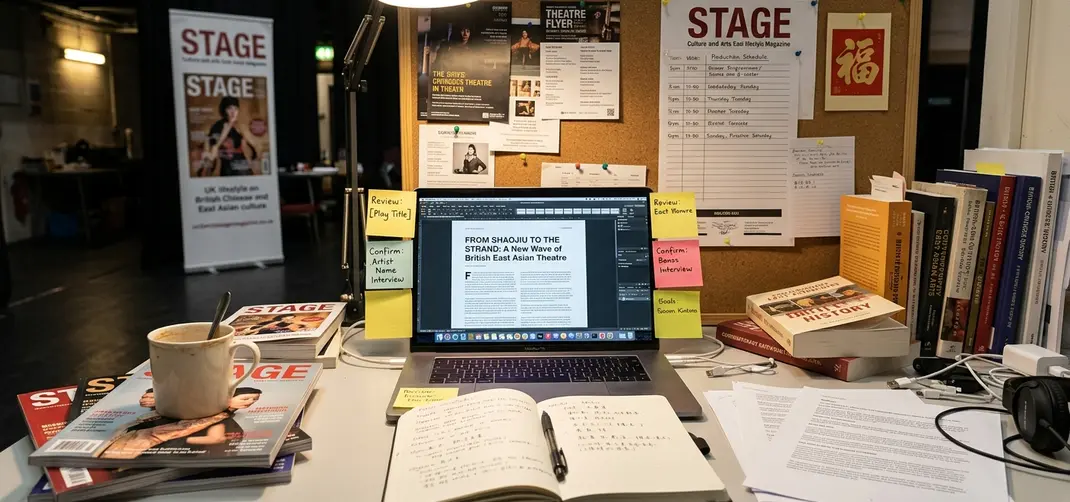
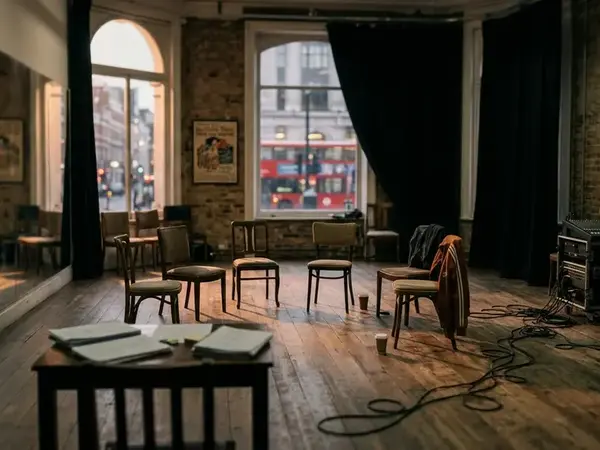
Sheen translated her personal experience into stage drama with her play There are Two Perfectly Good Me's: One dead, the other unborn. The King's Head Theatre scheduled the showcase for two performances on 1 and 8 February 2014. Audiences attending these dates experienced a raw, unfiltered exploration of identity.
The event was structured as a roughly 120-minute block. It included a companion piece titled I.C.U: Brandon and Michael. Together, these works show how the stage can hold complex personal histories.
Not Alone: Other Adoptees Tell Their Stories
To prevent the article from reading as a solitary biography, we wove in brief profiles of other individuals. Over several days prior to the main feature publication, we conducted secondary interviews to show a broader generational pattern among adoptees.
Claire Martin, a 52-year-old adoptee and daughter of a Chinese-British father, shared her testimony. Her experiences mirrored the cultural disconnect Sheen described. Similarly, Sue Jardine, a 50-year-old adoptee and poet, articulated the struggle of finding a voice within a system that historically silenced them.
This generation of adoptees is actively reclaiming their narratives. They are moving past the gratitude expected of them by mid-century social systems and demanding space for their complete, complicated realities.
From Ping Pong to the Page: A Career Spanning Decades
What prompts a successful actor to take up the pen? The discussion steered toward the mechanical differences between acting and writing. Sheen contrasted her experiences on the set of the 1980s film Ping Pong, where she co-starred alongside David Yip, with her solo writing process spanning 2012 to 2014.
Scripting allowed her to control the narrative lens. It marked a definitive shift from interpreting external scripts to generating autobiographical dialogue. When an actor performs in classical adaptations like The Orphan of Zhao, they inhabit a pre-existing world. When they write their own story, they build the world from scratch.
In practice: Transitioning from performance to playwriting requires a fundamental shift in perspective, moving from the execution of a vision to the architecture of the narrative itself.
The representation of British East Asians on screen and stage has shifted significantly since the 1980s. Sheen's evolution from performer to playwright reflects a broader movement toward self-authorship within the community.
A Note on Scope: One Story, Many Experiences
This piece reflects individual lived experiences and artistic expression, not clinical psychology. It is best read as a set of personal accounts, rather than a universal account of adoption.
The emotional trajectories discussed by Sheen, Martin, and Jardine reflect the specific socio-political climate of UK adoptions from Hong Kong during the 1960s. They differ sharply from current child placement protocols and cannot be mapped directly onto contemporary domestic adoption frameworks.
Worth keeping in mind: Assuming all transracial adoptees experience the same degree of cultural disconnect fails when adoptees are raised in highly diverse, multi-ethnic urban centers with active diaspora communities.
Adoption experiences vary widely. No single narrative represents all adoptees. We encourage readers seeking support to consult dedicated adoption services and licensed mental health professionals for clinical guidance.
What Lucy Sheen's Story Leaves Us With
This feature brings together themes of dual identity and artistic reclamation. The emotional and cultural weight carried by transracial adoptees is profound, yet the act of storytelling offers a powerful mechanism for agency.
The therapeutic value of playwriting as a tool for processing identity trauma varies heavily depending on the individual's access to culturally competent dramaturgical support and prior artistic training. For Sheen, the stage provided the exact framework needed to articulate her history.
These stories matter deeply for British Chinese and East Asian communities today. They remind us that representation is not just about visibility on a screen; it is about who holds the pen, who shapes the dialogue, and who ultimately owns the narrative.





Share Your Opinion