
The Last Service Before the Shutters Come Down
When a first-generation owner retires and a family takeaway closes, the handwritten order pads, the supplier ledgers, and the owner's memory of how they came to Britain usually leave with them. Commercial lease handovers and shop clear-outs typically occur within an 8-to-12-week completion window after a buyer is secured. Once a buyer strips out the stainless-steel range or skips the paper records piled in the back office, forty years of British Chinese and East Asian working history vanish in an afternoon.
A sold lease cannot be undone. The window for recording a family takeaway's history is the months before retirement, while the spatial memory of the kitchen is intact and the carbon-copy order pads, handwritten wholesale supplier ledgers, and bilingual stock notebooks still sit on their shelves.
Families and local heritage groups frequently set out to capture these stories, only to stall before pressing record. Projects break down over four recurring hurdles: earning the trust of elders who view their working lives as unremarkable, handling interviews in Cantonese, Hakka, Hokkien, or Teochew, securing clear consent across all siblings, and preparing digital files that a public archive will actually accept.
What a Takeaway Counter Remembers That a Family Photo Album Doesn't
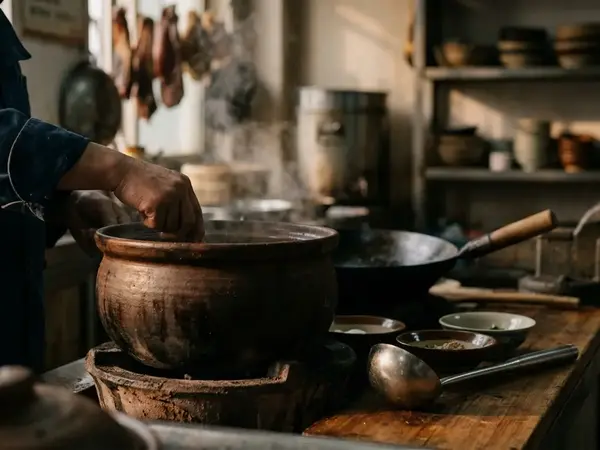
A seasoned carbon-steel wok with a welded handle or an annotated price list taped beside the till triggers procedural memories that a standard seated interview misses. When relatives ask only about the journey to Britain, they capture an arrival story while skipping the decades of daily labour that built the business. Anchoring the conversation in the physical workspace shifts the focus to how the shop actually ran.
Start with the culinary record across 20-to-40-year trading periods. A complete food history looks beyond the front counter to document three separate tiers of cooking:
- The numbered English menu: Dishes adapted over the decades for local British palates, tracking how recipes, portion sizes, and pricing evolved.
- Wall and counter specials: Handwritten Chinese dishes pasted to the tiles or counter edge for diaspora customers who knew what to ask for.
- The post-closing family meal: Off-menu staff dishes cooked on the main wok range and eaten together after the 23:30 closing time once the front shutters came down.
Pair these food memories with the operational detail of the shop. Ask about long-standing credit relationships with Chinese cash-and-carry drivers, the Friday night regulars, and the childhood routine of doing homework on flour sacks or translating disputes at the counter. To preserve the visual context alongside the audio, shoot high-resolution photographs across three operational layers: front-of-house signage and printed menus, the stainless-steel prep and wok range, and the back-room ledger storage.
Earning an Elder's Yes Without Turning It Into an Interrogation
Why do so many first-generation proprietors wave away requests to record their lives? Many elders dismiss forty years of night shifts as ordinary survival, while others carry a deep suspicion of formal questioning rooted in difficult early immigration interviews or historic kitchen inspections.
Putting a tripod and a release form on the table during the first conversation shuts the story down. Let a trusted relative or respected community elder make the initial approach in the proprietor's native dialect. Frame the project around passing practical knowledge to the grandchildren, and hold a casual briefing over tea or a meal 1 to 2 weeks before any recording equipment appears.
That breathing room gives the elder control over the schedule and the setting, whether they prefer the living room at home, a community centre, or the takeaway counter after hours. Pace the actual recording to protect their voice and energy. Cap individual sessions at 45 to 60 minutes across 3 to 4 separate visits, giving the speaker space to reflect between sittings without vocal fatigue.
Cantonese, Hakka and Hokkien on Tape: Recording and Transcribing in Two Languages
A fluent dialect interviewer draws out dry humour, kitchen slang, and precise village names that vanish when an elder has to simplify their speech for a younger relative. Many first-generation takeaway owners speak Cantonese or regional dialects such as Hakka, Hokkien, or Teochew. While second- or third-generation family members may follow the gist of a conversation at the dinner table, translating idioms on the fly or transcribing the audio later often proves overwhelming.
Match the speaker with an interviewer who shares their exact tongue, or pair a younger family member with a fluent cousin or community volunteer who can guide the prompts.
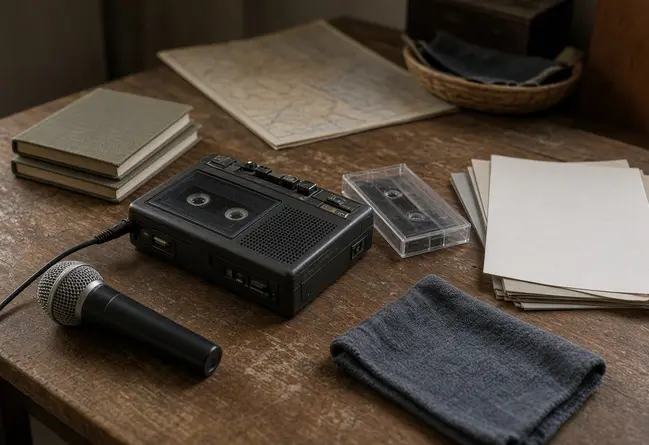
The physical space needs just as much preparation as the language. An active commercial kitchen ruins vocal clarity, so establish a strict acoustic divide before starting: power down the heavy overhead extractor flues and upright drinks chillers, or schedule the session during the quiet lull between afternoon prep and the evening service. Avoid placing a smartphone on a table between two people, where its internal omnidirectional mic will pull in fridge compressors and street traffic.
Use a dedicated digital audio recorder—or a phone paired with an external audio interface—connected to a cardioid lapel microphone clipped 20 to 30 cm below the speaker's chin. Record uncompressed WAV files at 48 kHz/24-bit. Once the audio is captured, budget 4 to 6 hours of work per recorded hour to build a two-layer transcript. This document pairs traditional Chinese characters and romanised dialect glosses (such as Jyutping for Cantonese or Pha̍k-fa-sṳ for Hakka) directly alongside the English translation, preserving the exact phrasing of the original speech.
Consent, Copyright and the Sibling Who Wasn't Asked
Securing a signed, bilingual clearance form before the first microphone is switched on prevents bitter family disputes months down the line. When one sibling records an aging parent in secret, another sibling who spent their teenage years working the deep fryers may later object to how the family business is portrayed in public.
Every recorded oral history carries two distinct layers of intellectual property: the copyright in the spoken words themselves (held by the interviewee) and the copyright in the sound recording (usually held by the interviewer or project organiser). Hold a joint meeting with all siblings before recording begins to agree on boundaries, and put those decisions into a written release form signed by both the speaker and the interviewer.
To give the family practical control without burying the history, structure the clearance form around three selectable permission tiers:
- Private family reference: Copies stay strictly within the family with no external distribution.
- Supervised researcher access: The recording sits in a public archive for accredited academic or local history researchers to consult in a reading room, with no public broadcasting.
- Open public exhibition and online access: The archive may stream the audio, publish transcript excerpts, and include the shop photographs in museum exhibitions or books.
Where an interview touches on raw commercial disagreements or sensitive personal chapters, apply a time-locked archive embargo of 10 to 30 years to specific passages rather than deleting the recording. Standard oral history release forms clear rights only between the interviewee and the interviewer; if the speaker names living third parties in commercial disputes or personal anecdotes, those segments require separate written clearance from the named individuals or audio redaction before an archive will release the file to the public.
Finding a Permanent Home at the Local Library or Record Office
A raw WAV file left on a personal laptop or a single portable drive rarely survives two device upgrades. Treating public archival deposit as the final goal from day one ensures the takeaway's story becomes a permanent part of British local history.
Contact a local studies library, county record office, or dedicated community archive before the first interview session. Archive intake review and cataloguing for community oral history deposits typically require 4 to 8 weeks from initial enquiry to a signed deposit agreement. Speaking to the archivist early lets you align your file-naming conventions and consent forms with their exact intake standards, avoiding the headache of tracking down signatures a second time after the shop has closed.
When the sessions wrap, assemble a complete deposit package for the repository:
- Master uncompressed 48 kHz/24-bit WAV audio files.
- Time-coded bilingual transcripts saved in archival PDF/A format, including a session summary with topic timestamps.
- Uncompressed TIFF or high-resolution JPEG photographs of the shop, embedded with metadata captions naming the date, location, and individuals or objects shown.
- Counter-signed release forms specifying the chosen access tier and any embargo dates.
Your Family's Takeaway, Recorded in Six Steps
Your parents have accepted an offer on the takeaway lease, leaving a 6-to-10-week countdown before they hand over the shop keys. Here is how you run the complete capture schedule from the first family meeting to final archive deposit:
- Weeks 1–2 (Family Agreement and Archive Contact): Gather your siblings to agree on who will conduct the interviews, which dialect will be spoken, and which permission tier applies. In the same week, contact your county record office or local studies library to obtain their intake guidelines and adapt your bilingual release form to match their terms.
- Week 3 (The Unrecorded Tea Briefing): Have the chosen interviewer sit down with your parents over tea or a meal with no recording gear present. Walk through the topics in Cantonese, Hakka, or Hokkien, review the clearance form together, and let them choose where and when to talk.
- Week 4 (Photographing the Intact Workspace): Before boxes pile up, photograph the shop across its three operational layers: the front counter and menus, the stainless-steel wok range, and the back-room supplier ledgers. Pull out an old laminated menu, a handwritten specials board, and a seasoned wok to sit on the counter as visual prompts.
- Weeks 5–7 (The Dialect Recording Sessions): Schedule 3 to 4 separate visits in the quiet afternoon window between prep and evening service. Switch off the canopy extractor fans and upright drink chillers, clip the cardioid lapel microphone 20 to 30 cm below your parent's chin, and record 45 to 60 minutes per visit in 48 kHz/24-bit WAV format. Cover the numbered English customer menu, the Chinese wall specials, and the post-23:30 family meals alongside the daily rhythms of the counter.
- Weeks 8–9 (Two-Layer Transcription and Verification): Draft the time-coded transcript pairing traditional Chinese characters and romanised dialect glosses with an English translation. Bring in a second fluent dialect speaker to cross-check timestamped uncertainties, then sit down with your parents to review the edit, redact or embargo any third-party disputes for 10 to 30 years, and counter-sign the release forms.
- Week 10 (Final Archive Deposit): Package the master WAV files, the PDF/A bilingual transcripts, the captioned TIFF or JPEG shop photographs, and the signed release paperwork, and deliver the collection to the local archive alongside a private backup copy for every sibling.










Share Your Opinion